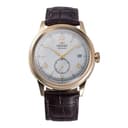
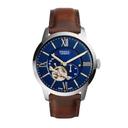
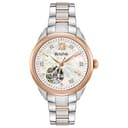
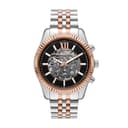
The two specs worth paying for under $500
At this budget almost everything else is noise, and these two are not.
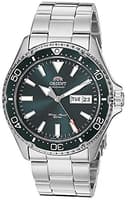
The crystal. Sapphire scratches at 9 on the Mohs hardness scale; mineral glass sits in the low 6s and the dust and grit in everyday life sits in between, which is why a mineral crystal picks up hairlines and a sapphire one mostly does not. On a watch somebody will wear for a decade, the crystal is the part that decides whether it still looks new. Exactly one of these eight publishes sapphire — the Kamasu — and it is most of why it is our top pick. Our crystal guide has the detail.
The water-resistance rating. A mechanical watch has a crown that unscrews, a caseback that comes off and gaskets that age, so it is more exposed to water than a quartz watch is, and water is what kills mechanical movements. Three of these eight publish 200m, which is genuinely unbothered; the Bambino publishes 30m, which is rain and hand-washing and nothing more. The ladder is in our explainer.
Everything else — the jewel count, the brand’s heritage story, the finishing on the rotor — is either marketing or a thing you cannot see. Jewel counts in particular: 21 and 24 jewels are the ordinary numbers for these calibers and a higher one is not a quality grade.
The eight compared, from the published spec sheets
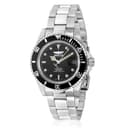
The caliber column is the one most lists leave out, and it is the most useful one here. Two different Orients on this page run the same F6922, and the Invicta runs a Seiko NH35A — which means a watchmaker anywhere will recognize all three and parts exist for all three. A listing that names no caliber at all is telling you something, and three of the eight above do not name one, which is recorded honestly rather than filled in.
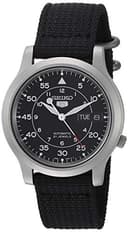
The hand-winding column we did not include, because only one entry publishes it clearly: the Orient Bambino’s F6222 can be hand-wound, and the Seiko 7S26 in the SNK809 famously cannot — it has no hand-winding and no hacking, so you set it by shaking it awake. That is a charming quirk to an enthusiast and a genuine irritation to a first-time owner, which is why the SNK809 is our “first automatic” pick with a caveat rather than without one.
What $500 does not buy, and what the next tier does
Being straight about the ceiling. Under $500 you are not buying a Swiss automatic, a chronometer certification, a long power reserve or a finished movement you would want to look at. The cheapest Swiss automatic in our registry is the Tissot PRX Powermatic 80, and what the extra money buys there is specific: an 80-hour power reserve, so the watch is still running on Monday after a weekend in a drawer. That is the one upgrade at the next tier that changes daily life, and the reason it matters is on quartz versus automatic.
What you are buying under $500 is the thing that actually makes a mechanical watch a good present: a machine with no battery in it that runs on the movement of the wearer’s arm, that can be serviced rather than replaced, and that will still work in forty years if somebody looks after it. That argument is made properly on a first automatic watch, and the servicing cost nobody mentions is on how often a watch needs servicing.
The one to skip — and why
Skip any automatic under about $80. Below that price the movement is unnamed, unserviceable and usually the single cheapest mechanical caliber available, and the honest comparison is not against a better automatic — it is against a $50 quartz watch that will keep better time for five years without being touched. A mechanical watch is a machine with consumable lubricants in it; buying the cheapest possible version of one is the worst value in watches. Skip, too, a 30m automatic for anyone who will not take a watch off, because a crown and caseback that unscrew are exactly how water gets into a movement. And skip the jewel count as a buying signal: 21 and 24 are the ordinary numbers for these calibers, a higher figure is a marketing decision rather than a quality grade, and our guide to jewel counts explains what they are actually for.
Which one, for which recipient
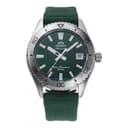
Someone who swims, showers or works outdoors gets the Kamasu or the Mako — both publish 200m, and the Kamasu adds the sapphire crystal for a modest step up, which is the best few dollars on this page. Someone with a slim wrist gets the Seiko SNK809 at 37mm, which is also the cheapest way into a genuine Seiko automatic. Someone who wears a suit gets the Bambino, with the warning that 30m means it comes off before a shower.
For a woman, the Bulova Sutton at 34.5mm is the only automatic in our registry in the right size, and we say so rather than recommending a men’s watch at 42mm; the rest of that list is on watches for women. For the mechanism as the whole gift, the open-dial options are on best skeleton watches. And if this budget is above where you wanted to be, under $200 holds the two automatics here that qualify — the Invicta and the Townsman — alongside better quartz watches than either.
What the band below this one looks like
Worth reading before you spend the full $500, because the step is smaller than the gap in the numbers suggests and bigger in one specific place. Automatic watches under $200 is the same style with the ceiling halved, and four references qualify on a live price. Two things change going down: the crystal, because nothing under $200 in this registry publishes sapphire, and the water rating, because only one of the four is rated for swimming.
What does not change is the movement’s honesty. The under-$200 top pick publishes its caliber, a 22-jewel count and a daily accuracy figure, which is more than several watches above it disclose — so if the budget is the constraint rather than the specification, that page is not a compromise, it is a shorter list.