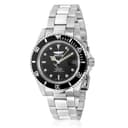
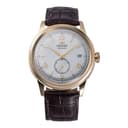
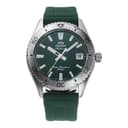
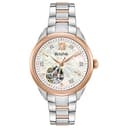
Three things to tell them on the day
Every complaint people have about their first automatic comes from one of these three surprises. Saying them out loud when the box is opened turns all three from faults into features.
- It stops if it is not worn. Left on a dresser, a typical automatic runs down in about a day or two and then stops. That is normal. They set it and wear it again, or give the crown a few turns. Our guide to setting an automatic watch covers it in two minutes.
- It will not keep perfect time. A mechanical watch runs a few seconds fast or slow every day — that is what mechanical means. A $20 quartz watch is more accurate than every watch on this page, and that is not the point of any of them.
- It needs servicing eventually. A mechanical movement is oiled machinery and the oil dries out. Servicing costs real money, and on the least expensive watches here it can approach what the watch cost. Most owners of an entry automatic simply wear it until it stops and replace it, which is a perfectly reasonable plan — just not a secret worth keeping from them.
Hacking and hand-winding: the spec worth checking
Two small features separate a modern entry automatic from an older one, and they are the difference between charming and annoying.
Hacking means the seconds hand stops when the crown is pulled out, so the watch can be set to the exact second. Hand-winding means the crown can wind the mainspring directly, so a stopped watch starts without being shaken awake. Seiko’s 4R36 and Orient’s F6222 and F6922 do both. Seiko’s older 7S26 — the movement in the SNKE dress watch on this page — does neither, which is why that watch is cheaper and why we have flagged it on its own card rather than in the small print. It is a lovely watch for someone who wears it daily and a slightly irritating one for someone who does not.
Automatic is not the same as hand-wound
Two of the most charming mechanical watches on this site — the Timex Marlin reissue and the Hamilton Khaki Field Mechanical — are hand-wound, not automatic. There is no rotor: they must be wound by hand every morning or they stop. Some people love that ritual and some find it a chore, and it is worth knowing which you are buying for. Neither is on this list for that reason, but if the ritual sounds appealing rather than tiresome, both are excellent. Quartz vs automatic lays out the wider trade-off.
Do they need a watch winder?
No. A winder is a motorized box that rotates a watch to keep it running while it is not being worn, and for someone with one automatic it solves a problem they do not have — a stopped watch takes about fifteen seconds to restart. Winders make sense for a collection with a perpetual calendar in it, or for someone who already owns several automatics. As part of a first automatic gift, the money is better spent on the watch or on a second strap.
The fourth surprise, which arrives years later
A mechanical watch runs on a few microlitres of oil at each of its jewelled bearings, and oil degrades. That makes servicing a real part of owning one — not urgent, not frightening, but worth knowing before you buy rather than after. Our guide to how often a watch needs servicing explains what the job is, when it is worth paying for on an inexpensive automatic, and which movements have no service interval at all.
The one to skip — and why
Skip a first automatic entirely for someone who wears a watch only occasionally — for weddings, for work, for the times they remember. They will pick it up dead every single time, and after the third occasion the watch becomes a small recurring chore rather than a gift. That person wants a solar watch, which charges from any light and never stops: the solar picks are the kinder choice, and nobody has ever been disappointed by not having to reset the date.