What a Black Bay actually is, on the record
Montres Tudor SA is a Swiss watchmaker based in Geneva. The Tudor trademark was registered in 1926 on Hans Wilsdorf’s behalf — Wilsdorf founded Rolex — he took it over in 1936, and Montres Tudor SA was founded in 1946. The brand was conceived as a more affordable product for authorized Rolex dealers, because Rolex’s own in-house movement output was limited. That origin is worth knowing, because it is the same reasoning this page runs on: a watch that does the job of a more famous one for less money is not a lesser idea, it is Tudor’s founding idea.
On the watch itself, Tudor’s in-house calibers include the MT5601 for the Black Bay Bronze, the MT5602 for the Black Bay and Black Bay Dark, the thinner MT5402 for the Black Bay 58 and the COSC-certified MT5652 for the Black Bay GMT. The MT5602-1U, announced on 25 May 2021 with the Black Bay Ceramic, has a 70-hour power reserve and was Tudor’s first METAS Master Chronometer. Tudor’s in-house movements typically run within -4/+6 seconds a day, in line with COSC chronometer standards.
One honest note on what this page does not claim. Our source publishes no case size and no water-resistance figure for the Black Bay line, and no retail price, so this page states none of the three. Everything compared below is compared against what the picks themselves publish, not against numbers we would have had to invent.
The specification gap, and where it closes
The three numbers Tudor does publish are the ones to aim at, and two of them are reachable.
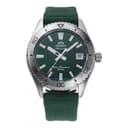
An in-house movement. Both Orients run Orient’s own F6922, built in-house: Orient Watch Co. was established as an independent watchmaker in 1950 and its movements are produced in-house by Akita Epson in Yuzawa, Akita Prefecture. That is the same kind of claim Tudor makes about its MT calibers, from a company that has been doing it for seventy-five years.
A chronometer-grade accuracy figure. This is the one that does not close. No pick here publishes a daily accuracy figure at all, let alone -4/+6 seconds a day. If published accuracy is the thing you are buying, nothing on this page replaces it, and we would rather say so than pretend otherwise.
A 200m case. Three picks publish 200m outright — both Orients and the Victorinox I.N.O.X. Automatic — which is the same figure Tudor’s own 1958 Submariner reached. The Seiko GMT publishes 100m, and the Timex Q publishes 50m, which is the trade for its price and its acrylic crystal.
| Pick | Movement | Case | Crystal | Water | What it borrows | Price |
|---|
| Orient Mako Automatic | Orient F6922 automatic, in-house | 41.8mm steel | Mineral | 200m | The mid-sized steel heritage diver, whole | |
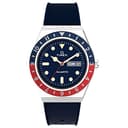
| Timex Q Reissue 38mm | Quartz | 38mm steel | Acrylic | 50m | The period-correct 1970s look, at a fifth of the size of the bill | |
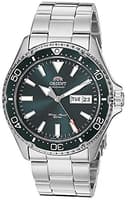
| Orient Kamasu Diver | Orient F6922 automatic, in-house | 41.8mm x 12.8mm steel | Sapphire | 200m | The crystal and the 120-click bezel | |
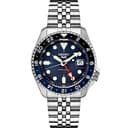
| Seiko 5 Sports SSK003 GMT | Seiko 4R34 automatic GMT | 42.5mm steel | Hardlex | 100m | A mechanical second time zone, like the Black Bay GMT | |
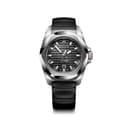
| Victorinox I.N.O.X. Automatic 242039 | Swiss automatic | 41mm x 12mm steel, screw-in back | Not published | 200m (20 ATM) | Swiss, mechanical, 200m, five-year warranty | |
The strap, which is the most Black Bay thing you can buy
Here is a cheap win most alternatives lists miss. Tudor supplied the French Navy with watches without bracelets specifically so military straps could be fitted — the fabric-strap look is not a styling exercise, it is where the watch came from. Three picks here publish a 22mm lug width (both Orients) or 21mm (the Victorinox), which means a NATO or a single-pass fabric strap is an off-the-shelf part costing a few dollars. Swapping the bracelet for fabric is the single change that moves any of these closest to the heritage-diver look, and it costs less than a lunch.
Our NATO vs leather strap guide covers the choice, how to change a watch strap is the five-minute job, and a watch and a second strap is how to give both at once.
The one thing none of them can give you
Not the movement, not the case, not the rating — all three are matched or beaten somewhere on this page. What none of these five has is the lineage: a watch whose own maker issued it to two navies and then reissued its own 1950s design seventy years later. That is not a specification and it cannot be bought at this price. If it is the lineage specifically that the recipient wants, buy the Tudor and buy it from Tudor; this page is for the much more common case, which is somebody who likes the look and the idea and has a few hundred dollars rather than a few thousand.
A homage is a legitimate watch that borrows a design language; a counterfeit pretends to be the original and is a crime. Every pick here carries its own maker’s name on its own dial and makes no claim to be anything else. If you are worried about the other kind, our guide to spotting a fake is where to start.
The one to skip — and why
Skip the Victorinox I.N.O.X. Automatic unless “Swiss and mechanical” is genuinely the requirement. It is the most expensive watch on this page by a wide margin, its crystal material is not published anywhere we can read, and a rubber strap on a 41mm case is a tool-watch look rather than a heritage one — so you are paying a large premium for the country of origin and the five-year warranty rather than for the thing you came here for. The Orient Kamasu publishes a sapphire crystal, 200m and an in-house movement for well under half the money. If Swiss is the non-negotiable part, best Swiss watches under $500 is the sensible band to shop in.