Three specs decide an Eco-Drive, and the movement is not one of them
Every watch on this page runs on light, so the light-powered part cancels out and stops being a reason to choose between them. What is left is the part most buying advice skips.
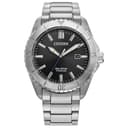
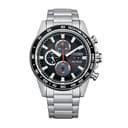
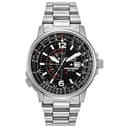
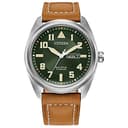
1. The crystal, because this watch is not coming back. Sapphire is far harder than mineral glass and resists the scuffs that make an older watch look tired; mineral glass is cheaper and picks up fine scratches over years. Four of our eight publish sapphire — the Sport Casual, the Garrison, the Peyten and (outside the picks, on a leather strap) the Weekender AW1840-09L. The Nighthawk, the Promaster Diver, the Corso and the women’s Dress Crystal all publish mineral. Our sapphire vs mineral guide has the full comparison, and best sapphire crystal watches is the page if the glass is the whole priority.
2. The case material, which is where Citizen is unusual. Three picks here are Super Titanium rather than steel. Citizen’s own technology page claims the material is “more than five times harder than stainless steel, at nearly half the weight,” achieved by applying its DURATECT surface-hardening treatment to pure titanium, and says it helps protect against metal and nickel allergies. That is Citizen’s claim rather than ours, and we pass it on as such — but a lighter, harder case on a watch designed to be worn every day for years is a real argument, and it is why best titanium watches overlaps this page so heavily.
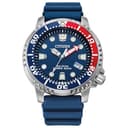
3. The published warranty term, which splits the page in half. The four references whose specs we read from Citizen’s own US product pages — the Sport Casual, the Garrison, the Promaster titanium diver and the Peyten — each publish a five-year limited warranty. The older entries, read from their listings, state only “Citizen limited warranty” with no term at all. We record what each source publishes and nothing more. An empty warranty cell is a finding about the listing, not a judgment about the watch.
The two we would like to offer and cannot today
Two Eco-Drive references in our registry return no live price from our daily price check, so they are named here rather than ranked above. The Addysen BM7252-51E is the gold-tone one — a 41mm gold-tone case with a sapphire crystal, 100m and a five-year warranty, which is a better specification than most gold-tone watches at any price. The Tsuki-yomi A-T BY1018-55X is the interesting one: a 43mm Super Titanium case with a moonphase, world time in 24 zones, a perpetual calendar and radio-controlled atomic timekeeping, so it corrects its own time as well as charging its own power. Neither is a pick, because a recommendation we cannot price is not a recommendation. If the gold-tone look is the point, best gold watches covers what can be bought today.
Where Eco-Drive stops helping, honestly
Two things. First, a light-powered cell is not a battery that lasts forever — it is a rechargeable cell, and after enough years it holds less charge, which is a service rather than a counter visit. Citizen publishes a full charge running for months in the dark, which is the figure that matters for a watch left in a drawer between occasions, and it is why an Eco-Drive is a far better gift than an automatic for somebody who wears a watch twice a year. Second, Eco-Drive is quartz. It keeps better time than any mechanical watch here and it has none of the romance; if the recipient wants something moving inside the case, best automatic watches is the other page, and automatic vs solar settles the choice directly.
The one to skip — and why
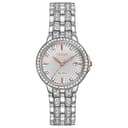
Skip the 28mm Eco-Drive Dress Crystal for anyone who swims. It publishes 30m, which covers rain and hand-washing and nothing else — and because an Eco-Drive is marketed as the watch you never take off, that mismatch catches people out. If the recipient is in and out of water, the Promaster Diver (200m) and the Peyten (100m) are the two on this page that cover it, and what water resistance really means explains why 30m is not thirty meters of swimming.